• Home
    • Ravelry
    • About
    • Pattern FAQ
    • Privacy
    • Terms
  • Blog
    • Contact
    • Become a pattern tester
Menu

Rove Handmade

Street Address
City, State, Zip
Phone Number

Rove Handmade

  • Home
  • Patterns
    • Ravelry
  • About
    • About
    • Pattern FAQ
    • Privacy
    • Terms
  • Blog
  • Contact
    • Contact
    • Become a pattern tester

About Icelandic wool - A visit to Ístex

November 15, 2017 Maria Valles
Rove Handmade

You’ve probably guessed by now that I have a soft spot for Icelandic wool (known as lopi) - it really is my favourite fibre, at least so far. I’ve tried other yarns, other fibres, even other wools, but I keep coming back. There’s just so much about it that I love - not least that it's a local, sustainable resource produced right here in Iceland. 

Isolated for centuries, the Icelandic sheep remains one of the purest breeds in the world (no other breeds have been introduced here) and its unique combination of fibres – long, glossy outer fibres called tog and fine, insulating inner fibres called thel  – result in a wool that is lightweight, warm and water-repellent. Different weights and qualities make it possible to go beyond the ubiquitous traditional knitted sweaters - lopapeysa to the locals - to produce beautiful and durable garments, accessories and homewares of all kinds.

Ístex is the biggest and most well-known manufacturer of Icelandic wool and produces a variety of qualities from lace weight to super bulky. I got to visit the Ístex factory in nearby Mosfellsbær last week and came away with an even greater appreciation of this wonderful wool.

Founded in the early 90s by employees of the original Álafoss wool factory, which it shut its doors in 1991 after nearly 100 years of operation, Ístex is today about 80% farmer-owned. It's these farmers who provide the fleece that gets turned into lopi.

Washed fleece ready for processing

Washed fleece ready for processing

The raw fleece is collected from farms around the country and first sent to the scouring facility in the northern town of Blönduos to be washed before making its way to the factory. Once it arrives at Ístex, it's sorted, dyed, carded and spun into yarn. Minimally processed to keep its natural properties intact, the finished yarn maintains a rugged, natural texture in an earthy palette of undyed shades and neutrals, as well as a wide variety of rich colours.
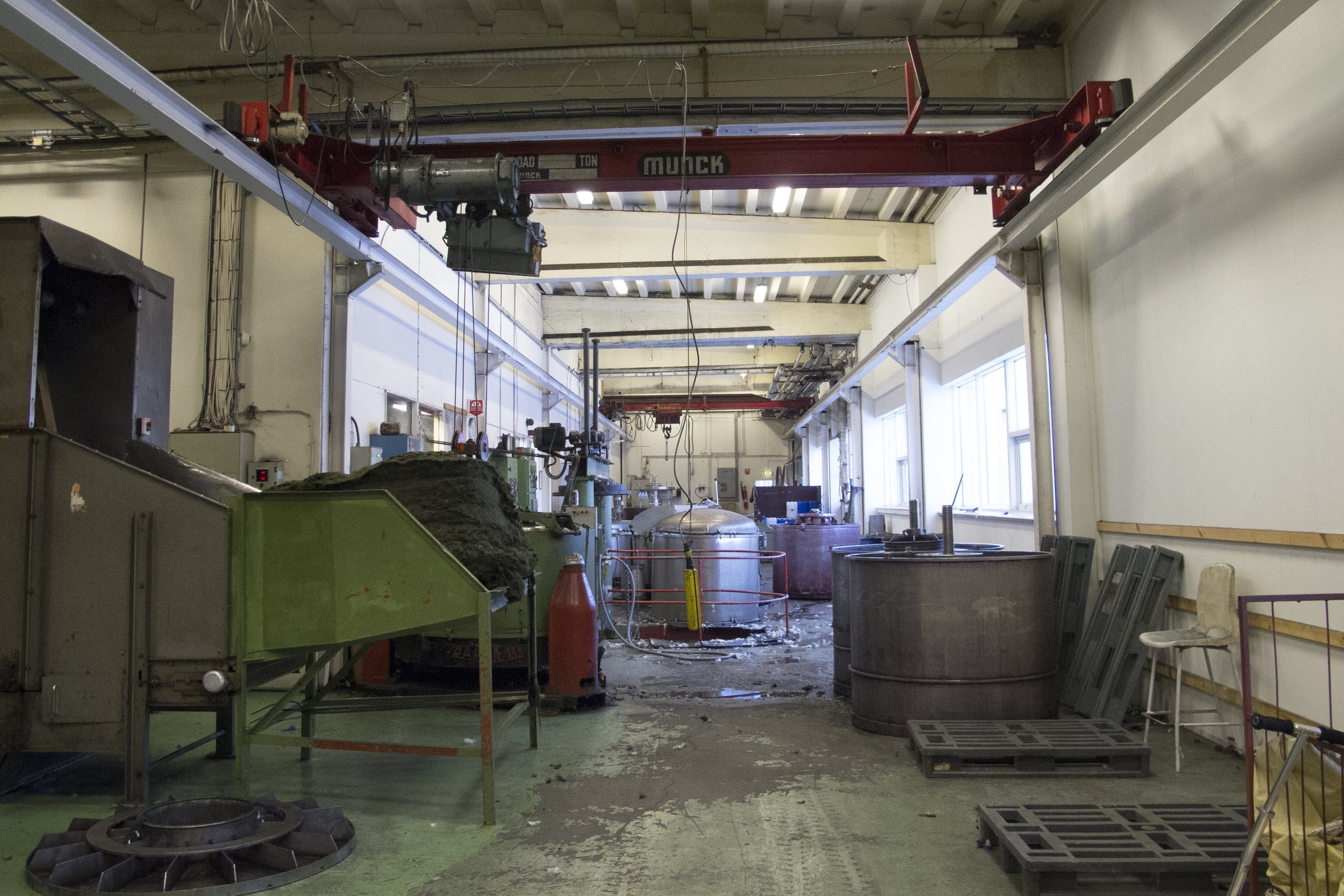
Vats for dyeing

Vats for dyeing

Dyed fleece ready for carding and spinning

Dyed fleece ready for carding and spinning

Carding machine

Carding machine

Skeins waiting to be wound
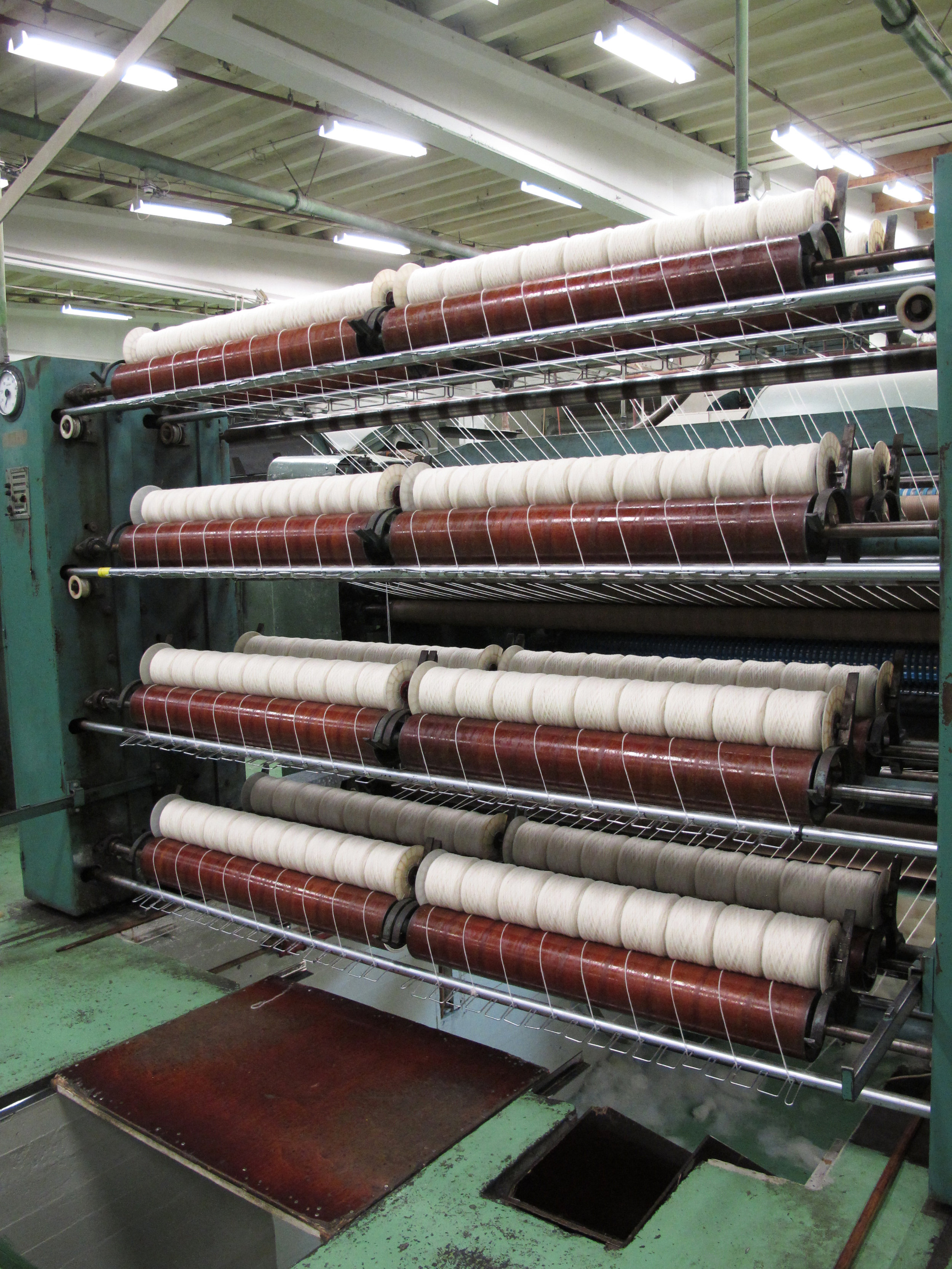
Skeins waiting to be wound

Making the threads before spinning and plying - this stage is what's known as plötulopi

Making the threads before spinning and plying - this stage is what's known as plötulopi

The finished yarns include Einband (lace weight), Léttlopi (worsted weight), Álafosslopi (bulky), Bulky Lopi (super bulky), Hosuband (blended with nylon for extra strength), and my personal favourite, Plötulopi, a single-ply unspun thread that is actually the in-between stage before spinning and plying into the other qualities.

Not only is wool a renewable natural resource and the wool grown here in Iceland mulesing-free, but the dyes used by Ístex are eco-friendly (most are OKEO-TEX 100-certified), and the factory itself produces virtually zero waste - loose fibres that fall to the factory floor are collected and either put back into processing or sold on to other buyers. Add lopi's sheer utility and versatility, and there are so many great reasons to use Icelandic wool.

While I mainly use Ístex yarns in my patterns, there are other, smaller brands out there that are definitely worth checking out as well, such as Helene Magnusson (The Icelandic Knitter), Uppspunni Mini Mill, Hespa (naturally dyed yarns), Gústa (an Icelandic wool/alpaca blend) and Einrúm (an Icelandic wool and silk blend also produced by Ístex). 

If you're curious about crocheting with lopi, you can take a look at my patterns which are designed using Icelandic wool or grab yourself a crochet kit with everything you need! For info on where to buy Icelandic wool yarns online, check out the Pattern FAQ page.

In Making Tags lopi, Icelandic wool, About Icelandic wool
Comment

Introducing kits

November 10, 2017 Maria Valles
Rove Handmade Basic Crochet Kit
Rove Handmade Deluxe Crochet Kit

I’m so excited to finally introduce DIY crochet kits for all four patterns in the Rove Handmade Volume 1: Grannies ebook. Kits come in both Basic and Deluxe versions in a range of five sizes and ten beautifully natural shades of Ístex 100% Icelandic wool yarn.

Rove Handmade kits

The Basic Kit includes yarn and pattern download code for crocheters who already have everything they need.

The Deluxe Kit comes with all the extras - bamboo crochet hook, notions, and a Rove Handmade wooden tag to add a finishing touch - and makes a special gift for the maker in your life (or just for yourself).

Both versions come packaged in a hand-stamped Rove Handmade natural cotton project bag.

A limited number of kits are available for preorder and will ship on December 9, 2017, just in time for the holidays.

You can check out the kits and preorder yours here.

In Shop Tags Crochet kits, Rove Handmade Volume 1: Grannies, Icelandic wool
1 Comment

Slow Fashion October 2017 - Care

October 31, 2017 Maria Valles
SFO_17.jpg

To wrap up Slow Fashion October, I’d like to share a few of the ways I make my own wardrobe go the distance. Whether handmade, second-hand or bought new, clothing that is well taken care of lasts longer, plain and simple.

I should start by saying that overall, I'm not too precious about my clothes - I just try to take a common-sense approach to getting the most out of them and making them last. When it comes to laundering, I machine-wash pretty much everything in cold and hang to dry on hangers (partly because of the limited space in our tiny shared laundry room and partly because it’s so easy to just stick them back in the closet once dry). And air drying is so much gentler on clothes than the heat of a dryer, never mind the energy and cost savings.

I also try to wear things at least three times before washing - like many of us, I work indoors so my clothes don't actually get "dirty". If something needs to be refreshed a bit but isn't really in need of laundering, I hang it by an open window overnight or gently steam it. I have a sort of two-week rolling rotation where things get mixed and matched a few times before going in the laundry bin - it's not an exact science, but so far it's working pretty well.

For my handmade knitted and crocheted items, I try not to wash them too often at all - a good airing out (outside if possible) is usually enough to freshen up a woollen sweater and get rid of any odours picked up from the environment. When I do wash my wool, I use the dedicated wool cycle on my washing machine with a very small amount of mild wool soap (such as Lopi Wool Soap), and then lay the item flat to reblock and air dry.

I also highly recommend investing in a battery-operated pill shaver. I got one a few years ago and it has saved so many of my knits (handmade, second-hand and store-bought) from the donation bin (and probably landfill). A good de-pilling combined with the occasional reblocking can take a sweater from tired, pilly and misshapen to completely refreshed and almost new-looking. (You can also use a razor to gently shave off pills, but unless you’re very careful, it can be a little too easy to accidentally cut holes in things… in my experience, at least.)

Dry-cleaning I keep to an absolute minimum - reserved only for coats and heavier items, and usually only once a season when these kinds of things are coming out of or going into storage.

So that's it in a nutshell - pretty basic really and as I said, common-sense ways to stretch the mileage of the things I own.

On another note, my unofficial challenge this month was to wear at least one handmade and/or second-hand item of clothing every day, not including accessories. I’m pleased to say that I managed pretty easily. Now that Slow Fashion October has wound down, I’m planning my winter closet re-organizing session and looking forward to taking stock and seeing what I’ve got with fresh eyes.

And finally, I’d like to thank Karen Templer from Fringe Association for providing this platform for anyone with an interest to explore and share ideas about what slow fashion means to them and how they approach it in their own lives. I’ve been following conversations on Instagram and elsewhere and have enjoyed seeing so many different perspectives. It’s definitely got me thinking even more as I try to articulate my own (sometimes contradictory) thoughts on this important topic and work to become a more conscious consumer and maker.

In How To Tags slow fashion october
Comment

Slow Fashion October 2017 - New

October 24, 2017 Maria Valles
Rove Handmade

I have been trying over the last few years to reduce the amount of things, especially new things, that I buy. Living in Iceland, it’s not all that hard for me to forgo clothes shopping for months at a time, mainly because things are just so expensive here. On the other hand, given that Icelanders ranked 8th out of 37 countries in Europe in terms of volume consumption per capita last year, it’s safe to say that Icelanders love to shop, and it’s as difficult here as anywhere to avoid the idea that consumption equals happiness.

One of things I’m working on the hardest is to think more carefully about what I’m buying - not just where it came from, but whether I really need it in the first place. Where I can, I try to buy from sustainable brands, but the truth is, that’s not always easy or within my budget. For some of us, it’s difficult to avoid fast fashion entirely for exactly those reasons. The fact is that I still buy mass-produced clothing from time to time (usually on sale), though much less often and, more important, less overall. I limit purchases to items that I know will last and that I’ll wear for much longer than a season or two, and I use basically the same rules as I do for buying second-hand: I have to have space for it, it has to fit well, and it has to be well-made, no matter where I’m buying from. I don’t feel too bad about having a good few “fast-fashion” items in my closet that I’ve had for years and that still serve me well. I’d love to replace them with more sustainable options one day, but as long as they’re still wearable, I don’t see the need.

And that’s essentially what slow fashion means to me, I think - it’s not just about buying from sustainable brands or small-batch designers and makers or natural, ethically sourced materials - it’s also about critically assessing our needs and wants, buying less and making the things we already have last longer.

Since this week's Slow Fashion October prompt is where, I'll close with a few of my favourite slow fashion sources:

  • I recently became obsessed with KowTow, a sustainable brand from New Zealand that's available here in Iceland at Org Reykjavik, a great source for sustainable clothing and accessories brands.
  • Farmers Market is a favourite Icelandic slow fashion label, as is Doppelganger Collection.
  • Aftur (which means again in Icelandic), makes innovative deconstructed designs from upcycled materials.
  • I discovered Toronto brand Hoi Bo two summers ago and am still in love with the linen shift I bought from their Distillery District shop.
  • For new fibre, I really only buy Icelandic wool - a local, natural and sustainable resource. Ístex is the biggest manufacturer (for where to buy online, check out my FAQ page), but there are several smaller brands by designers, spinners and dyers - among them Helene Magnusson, Einrúm and Hespa - that are definitely worth checking out.

Most of these are local to me, of course, but if you're inspired to spend less on clothes, you could use the savings to come visit Iceland and check them out for yourself ;)

Tags slow fashion october, new
Comment

Grannies CAL

October 20, 2017 Maria Valles
Rove Handmade

I'm starting my very first crochet-along! I decided it would be fun to do a CAL for my Rove Handmade Volume 1: Grannies ebook, open to anyone who'd like to try one of the patterns. This is a pretty casual and relaxed CAL, designed to be low-key and stress-free. To join in, check out the Grannies CAL Info & Chat thread in the Rove Handmade Ravelry group here, pick a project from the ebook and introduce yourself.

The CAL runs from Oct 21 to Dec 2. Oh, and there will be prizes - more on that later.

I'm so looking forward to seeing your projects!

Comment
← Newer Posts Older Posts →

Hello and welcome! I’m Maria Valles, a designer-maker from Canada who calls Reykjavík, Iceland home and has developed a lasting love affair with Icelandic wool, known as lopi. Endlessly inspired by my surroundings and the wool that is grown and prod…

Hello and welcome! I’m Maria Valles, a designer-maker from Canada who calls Reykjavík, Iceland home and has developed a lasting love affair with Icelandic wool, known as lopi. Endlessly inspired by my surroundings and the wool that is grown and produced here, I am the head and hands behind Rove Handmade.


Subscribe

Sign up with your email address to receive news and updates from Rove Handmade, and be the first to hear about upcoming releases, promotions, events, and more.

We respect your privacy.

Thank you for signing up! To receive Rove Handmade’s newsletter, please check your email to confirm your subscription. You can unsubscribe at any time by clicking the Unsubscribe link at the bottom of any newsletter emails you receive from Rove Handmade.


INSTAGRAM

Slow fashion Sunday #plötulopi #grannysquare
Replenishing #plötulopi #einband
Lazy day
Sunday
Home sweet home. New post on the blog
Saturday stash-busting #grannysquares #wip
Bolludagur 😃 #creampuffday #brauðogco
Big blue sky on this morning’s walk
Very pleased with my happy scrappy runner, which used up almost all of my cotton stash yarn 😀

  • How To
  • Making
  • Patterns
  • Shop

About

Patterns

Blog

Contact

Become a pattern tester

© Rove Handmade | All rights reserved